

Why We Engaged
Food Services (Compass Group) in the Eastern-Urban and Rural zones is considering expanding Meals on Wheels to communities on the toe of the Burin Peninsula, within the Clarenville area and communities outside St. John’s in the larger Census Metropolitan Area. The team wanted to use public engagement to gather information on community needs and preferences, and to ensure the service meets the level of demand, the preferred delivery frequency, and an acceptable price point.
Decision Statement
NL Health Services needs to decide where to expand the Meals on Wheels program in 2025 based on need, demand for the service, and the availability of partners to support management, delivery, and quality control.
Engagement Objectives
- To ensure all primary interest holders understand the Meals on Wheels service.
- To gather feedback on key decision points.
- To inform key interest-holders of the findings from the engagement strategy, decisions reached and any impending changes to the Meals on Wheels Service due to public engagement.
Who We Engaged
- Current and potential Meals on Wheels users and their caregivers or family members
- Senior’s groups and advocates, disability networks, churches, food banks, service clubs, community and primary care teams, Eastern zones
- NL Health Services personnel, including the Food Services team and senior leaders
- Provincial MHAs and municipal leaders, Eastern-Urban and Eastern-Rural.
How We Engaged
Engagement Level
Engagement for this project is at the “Involve” level. We promise to “…work directly with the public to ensure that decisions on where and how Meals on Wheels is offered in the Eastern-Urban and Eastern-Rural Zones reflect the needs of the communities involved. We will share with the public how their feedback influenced the decisions.
Engagement Activities
- On May 14, 2025, NL Health Services launched an engagement page with a public service announcement inviting the public to learn more and take a survey. The survey closed on June 14, 2025. A follow-up survey in August/September probed specific questions for clarity.
- Emails with information, posters, and key messages were sent to 216 contacts across the three catchment areas, including seniors’ clubs, foundations, service clubs, churches, disability organizations, schools, social support networks, wellness coalitions, and libraries. We included municipalities, local service districts, home care agencies and elected provincial and federal representatives.
- Emails were also sent to primary health care managers for distribution to Community Advisory Committee members and 70 subscribers on the Engage page.
- Posters promoting the engagement were distributed to Food Services’ staff.
- The organization used its social media platforms (Facebook, X and LinkedIn) to promote engagement from May to September.
What We Heard: Key Themes
- The initial online survey received 399 responses from seniors (13.5%), people with disabilities (5.76%), caregivers or family members of seniors or individuals with disabilities (32.3%), and members of the public with an interest in the program (39.1%). 40 individuals responded to the follow-up survey.
- Participants from all three proposed expansion regions responded, with 94 submissions from the Burin Peninsula, 60 from the Clarenville area and 233 from the St. John’s Metropolitan Area, excluding St. John’s.
- 100% of survey responses received from potential clients, caregivers, or family members said yes, they would like to see the Meals on Wheels program offered in their community.
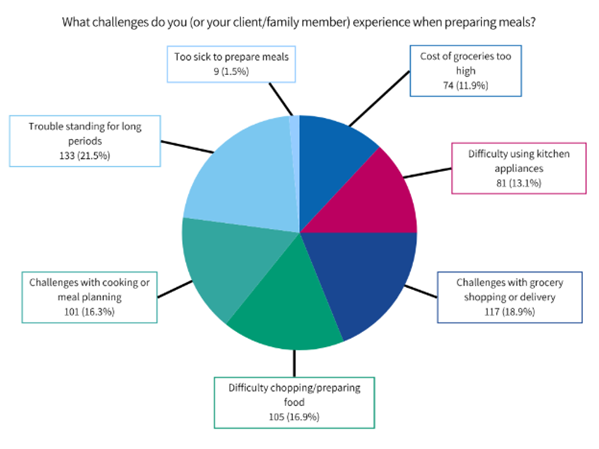
- 72.4% of potential clients reported challenges with meal preparation. Similarly, 98% of caregivers said the client or relative they support faces these challenges. Common difficulties included using kitchen appliances, grocery shopping, arranging delivery, chopping ingredients, and standing for long periods.
54.2% of potential clients and 85.2% of caregivers agreed with the statement, “Preparing meals impacts my comfort, quality of life, and/or ability to live independently at home.”
- 54.1% of potential clients and 70.6% of caregivers agreed with the statement, “I often rely on fast food delivery or meal preparation from others.”
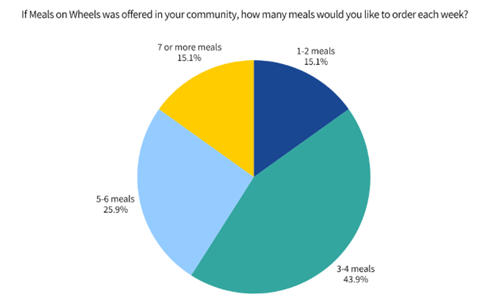
Respondents were asked to estimate the approximate number and type of meals (e.g. lunch or supper) they, their client, or family member would be interested in ordering each week if the Meals on Wheels program were expanded to their area. 43.9% of respondents said they would like to order 3-4 meals per week; 25.9% would order 5-6 meals; 15% would order 1-2 meals; or 7 or more meals per week. 72% of respondents would prefer to order supper rather than lunch.
- The $6.00-9.00 price range was the most popular choice among potential clients (64%) and caregivers (72%). The $9.00-12.00 range was selected by 27% of potential clients and 25.8% of caregivers, while the $12.00 or more range was selected in only 2% of caregiver responses and 9% of potential client responses. For the follow-up survey, 47.5% indicated a subsidy will likely be required for meals at the $8.50 price point.
- When asked to identify any specific challenges or circumstances that might affect their ability to receive and reheat meals, 20% of potential clients reported challenges with mobility, 8% identified issues related to vision or hearing, 8% noted memory or cognitive difficulties, and 7% said they would need help receiving or reheating meals. Nearly 50% of respondents in this group selected “Not applicable.”
- Nearly 80% of caregivers and family members reported that their client or relative faces at least one challenge that could impact meal delivery or reheating.
Next Steps
The project team will share engagement feedback with key informants and explore ways to expand Meals on Wheels in identified areas.
For information on this project, please email: Natasha.McDonald@NLHealthServices.ca.
Download a pdf version of this report here.
Prepared by the Office of Public Engagement, NL Health Services